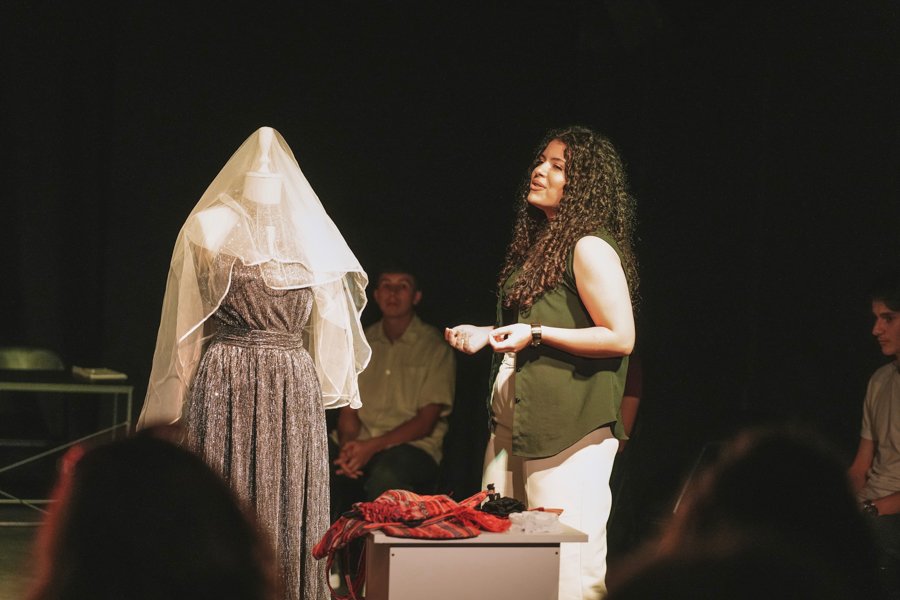
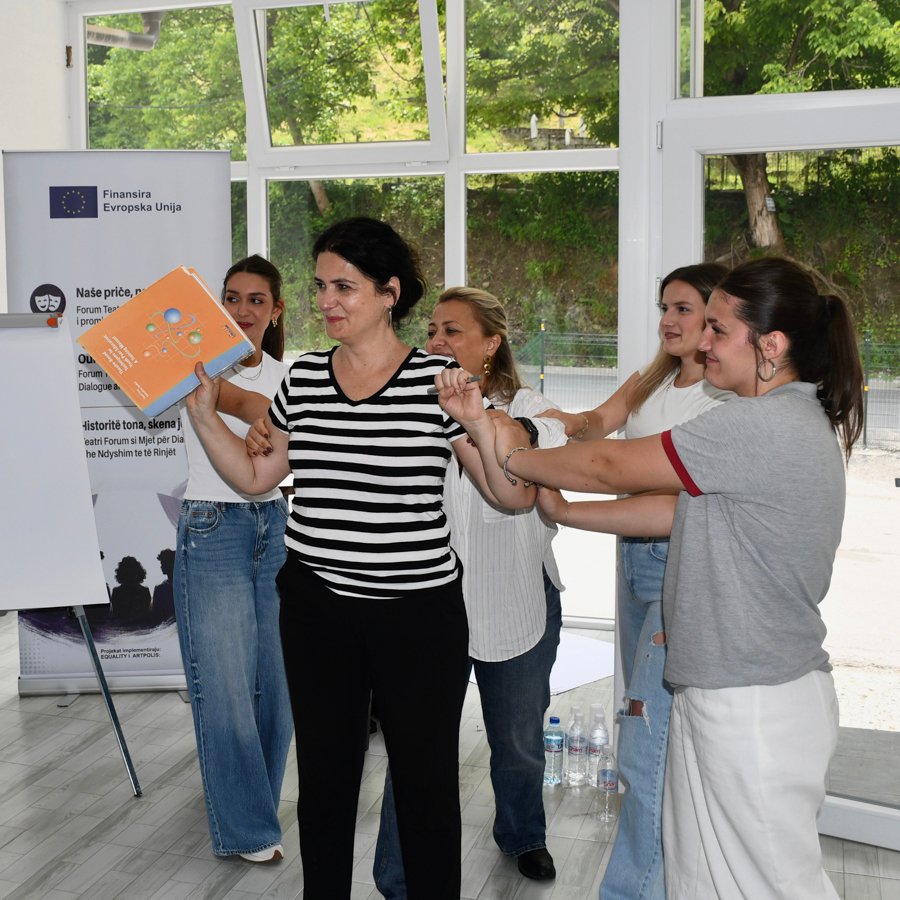
“Our Stories, Our Stage” brought dialogue to Barabar Centre, Prishtina
July 16, 2026
July 16, 2026
July 14, 2026
June 8, 2026

May 25, 2026
August 10, 2026
August 9, 2026
July 16, 2026
March 6, 2026
September 27, 2024
15.04.2026
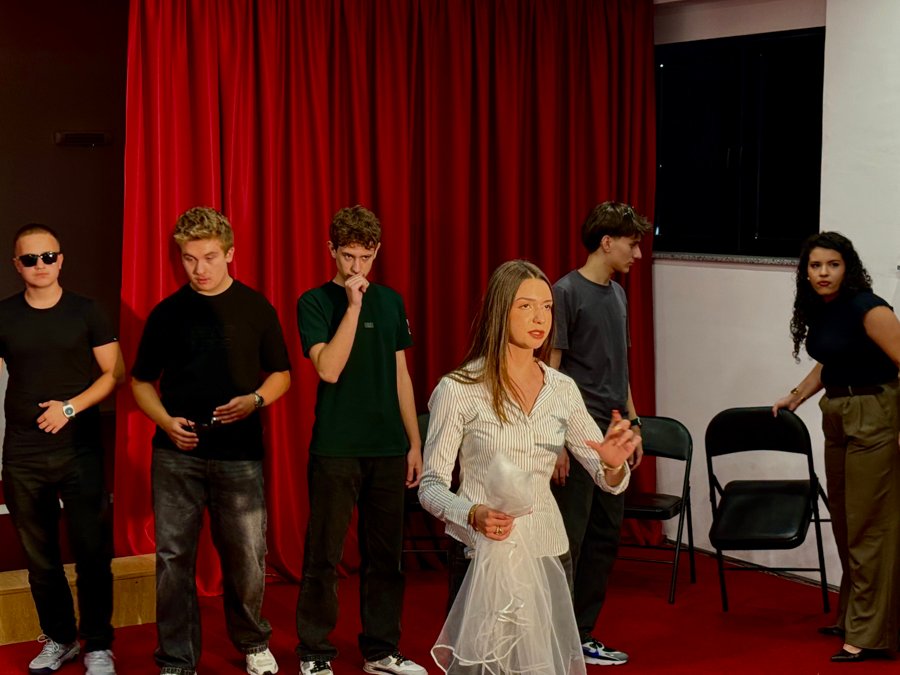
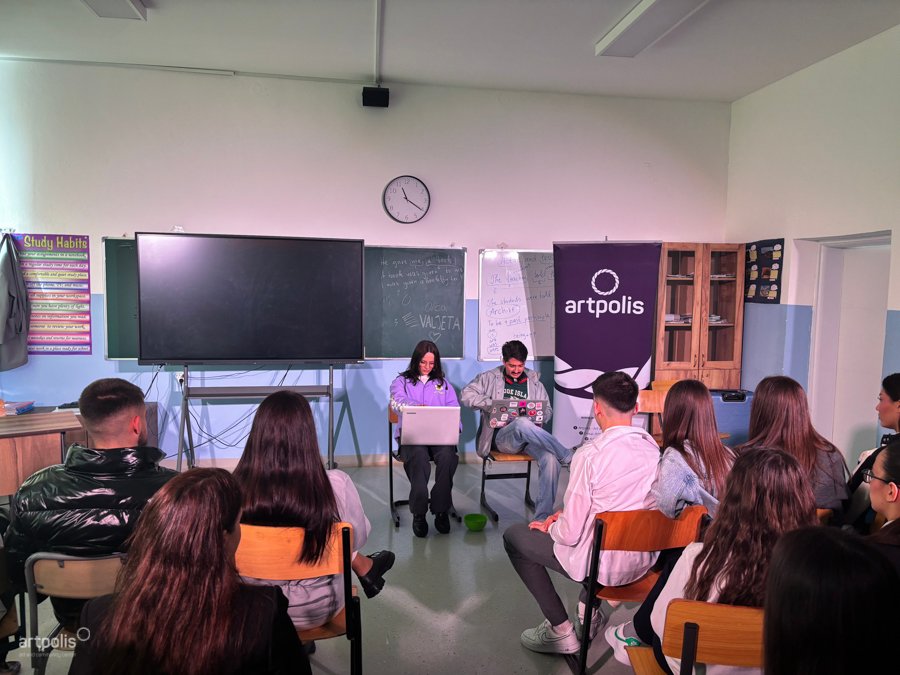
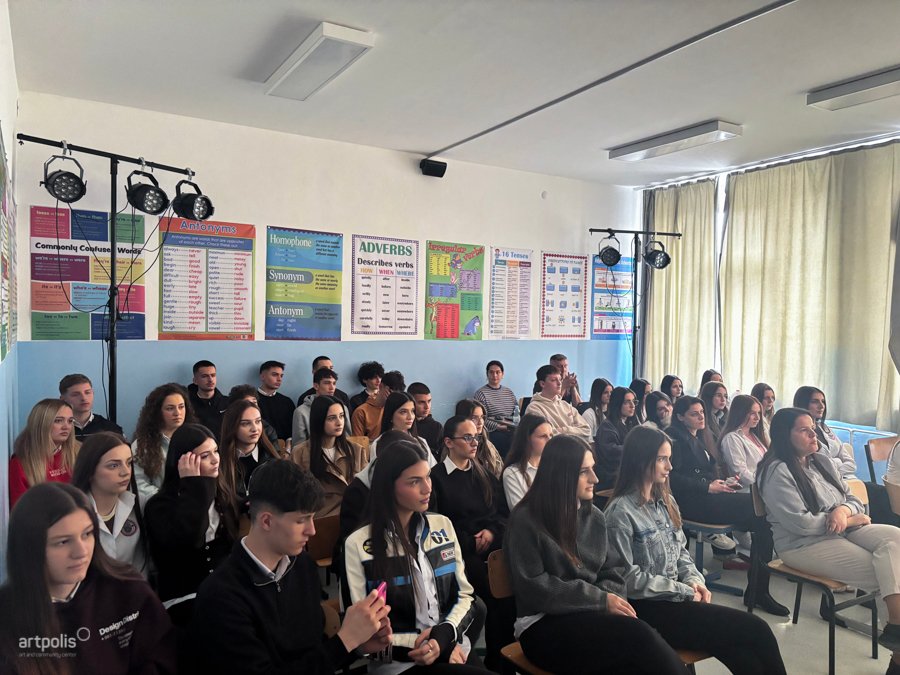
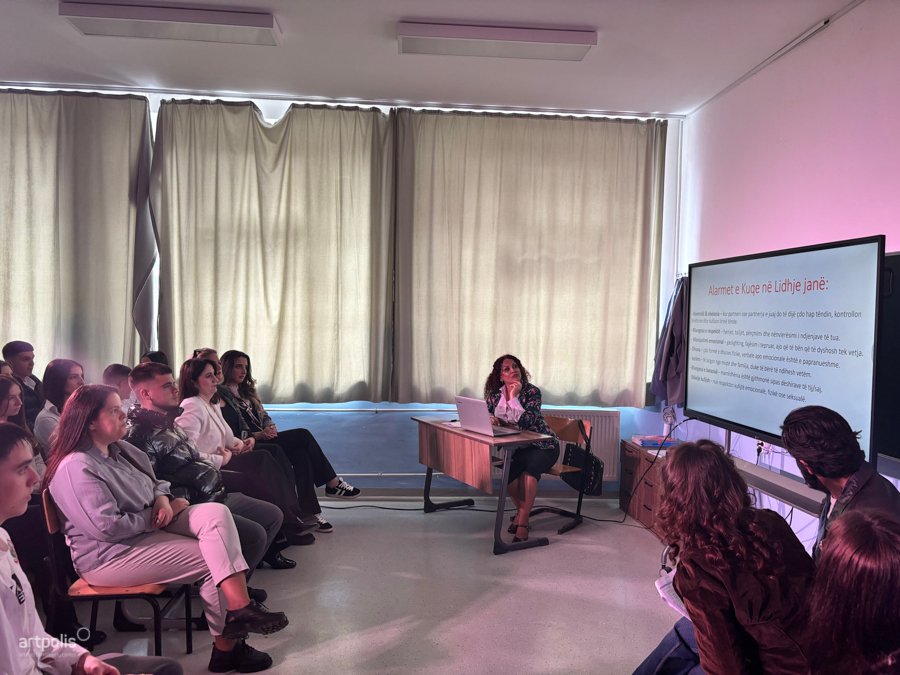
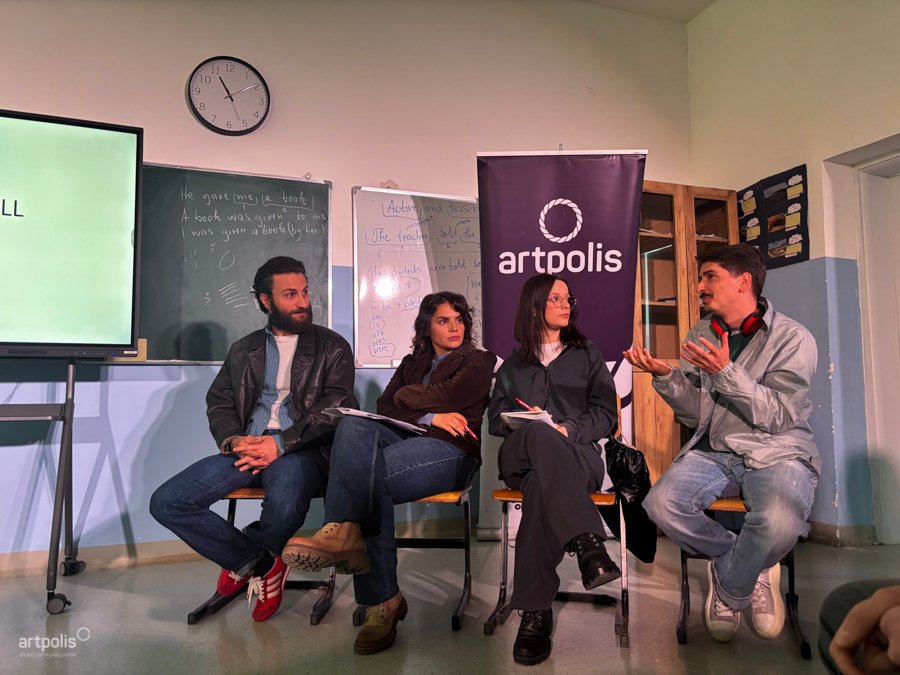
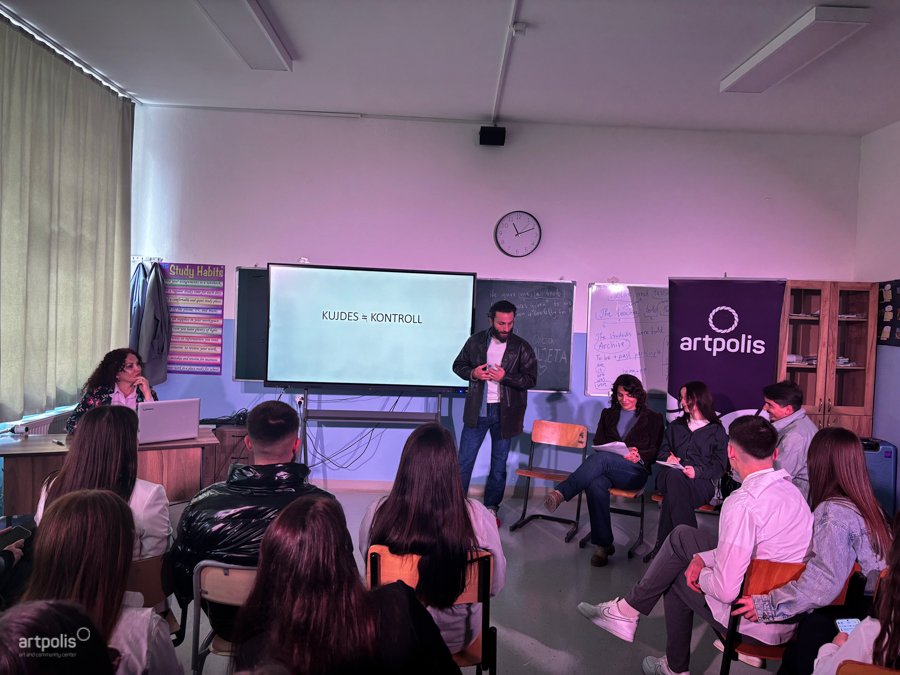
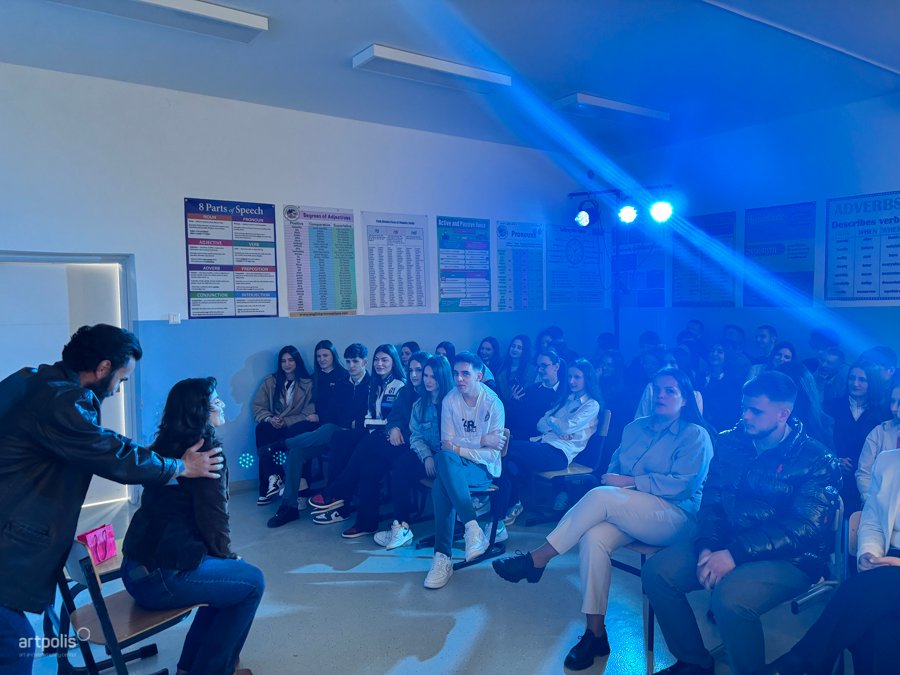
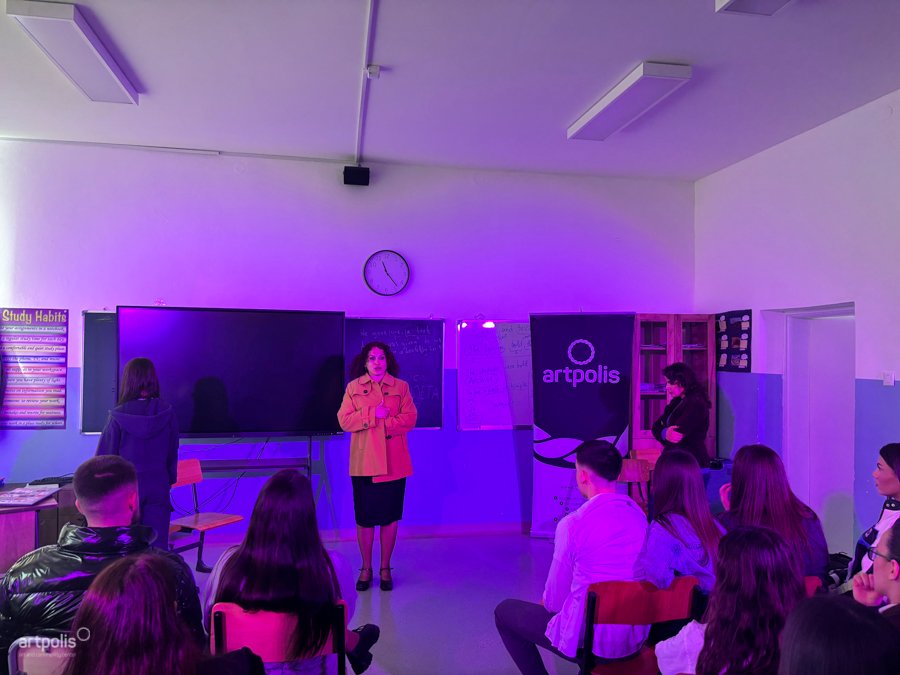
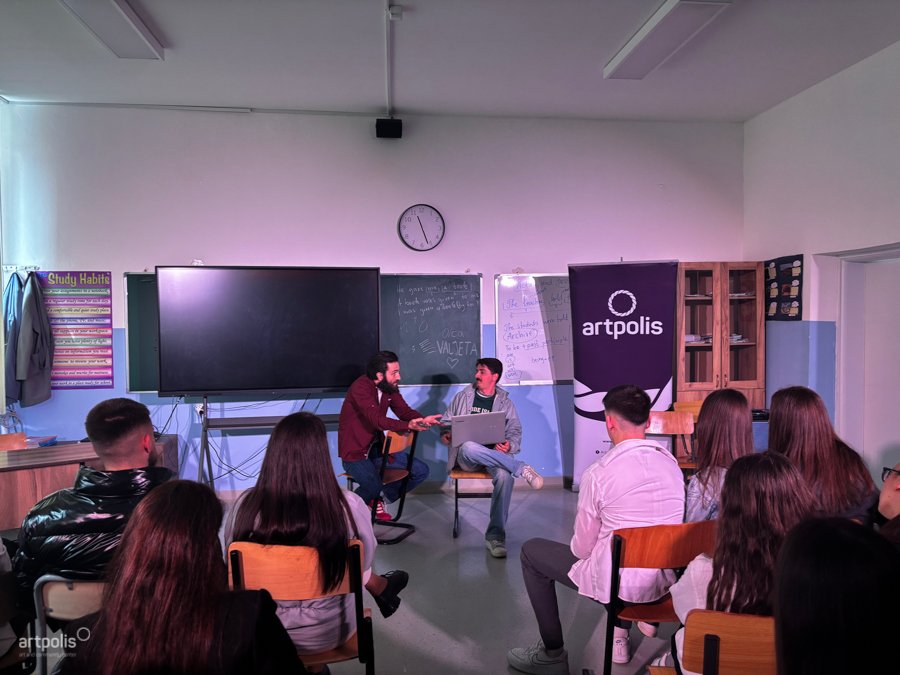
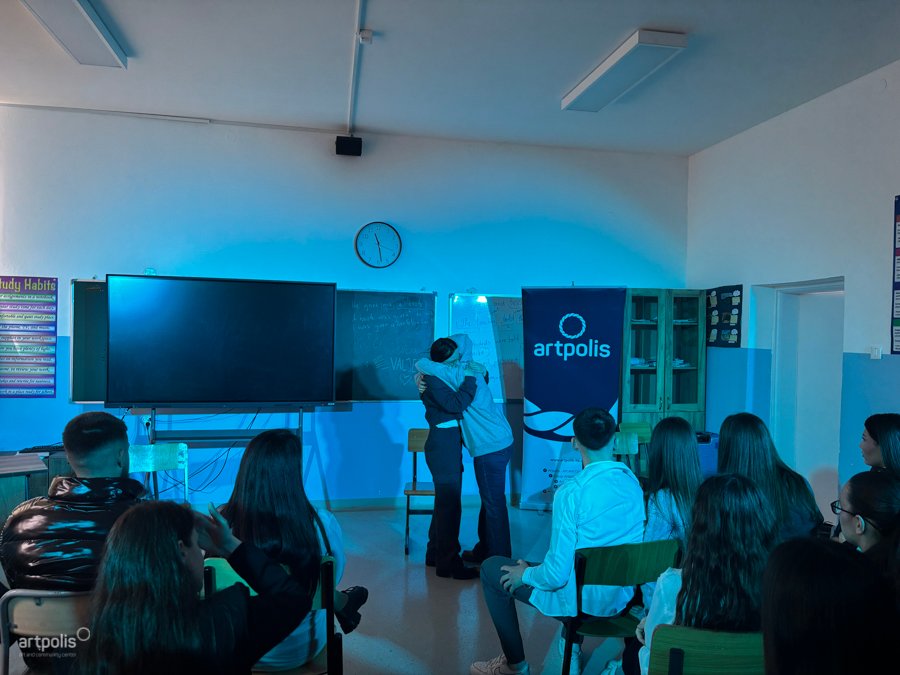
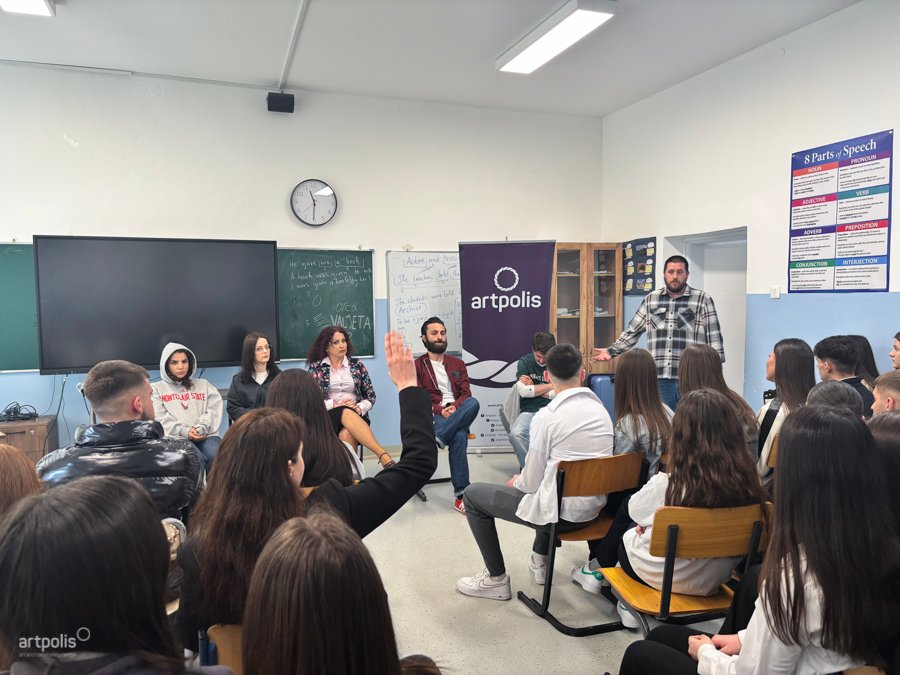
The theatre performance “Behind the Screen”, written and directed by Zana Hoxha, was presented yesterday at “Hamëz Jashari” Gymnasium in Skenderaj, sparking critical discussion on online abuse and its real-life consequences in an era increasingly shaped by artificial intelligence. Through the method of forum theatre, the performance transformed the audience from passive observers into active participants, turning the stage into a space for deep dialogue and collective reflection.
What gave the performance its philosophical depth was its exploration of one of the most pressing dilemmas of our time: the boundary between care and control. When the character Ardi declares that “there are rules, and he is the one who makes them at home,” the audience is confronted with a mindset that confuses possession with care.
The play also boldly addressed the use of artificial intelligence in generating manipulated videos and images, raising a crucial question: when technology enables the creation of a “reality” that never existed, who bears responsibility?
During the forum theatre segment, the audience posed sharp and thought-provoking questions: “What measures will be taken against Ardi?”, “Will she feel fear entering another relationship?”, “How did you feel after discovering that Krenar helped create the video?” One response from a teacher stood out in particular: “Responsibility will not lie with just one person, but with many.” This introduced a key idea—that of shared responsibility. The character Krenar admitted his role in creating the AI-generated video, yet attempted to separate the act of creation from its dissemination, opening a debate on the nature of remorse: can remorse be genuine without facing consequences?
The closing message from Professor Dritë (Anisa Ismaili) was a call for courage: “You should never be afraid if someone bullies you. You must seek help.” She connected joy and sorrow, reminding us that to be human is to share both.
Actress Qendresa Kajtazi, once a student of this very school, addressed the students at the end of the discussion with a clear message: “The most important things you need in life right now are ambition, education, and communication with your families.”
Egzona Lushtaku, a teacher at “Hamëz Jashari” Gymnasium, reflected after the performance: “I would like to thank Artpolis for this powerful performance and its important message—that love is not control, and that we must understand where care ends and control begins. It also showed that we are living in a time when social media is often used for harmful purposes, and highlighted how dangerous artificial intelligence can be today, especially when manipulated videos and images of girls are created—often by men—for profit or to damage someone’s reputation. Thank you for this initiative; its purpose was truly meaningful.”
In a time when digital reality increasingly shapes how we perceive ourselves and others, this performance reminds us that every click, every image, and every silence carries ethical weight. Because behind every screen, there is a real life—and every intervention, whether artistic or human, becomes an act of resistance against dehumanization.
This performance was organized by Artpolis, with the support of the Kosovo Women’s Network and the East West Management Institute.
August 10, 2026
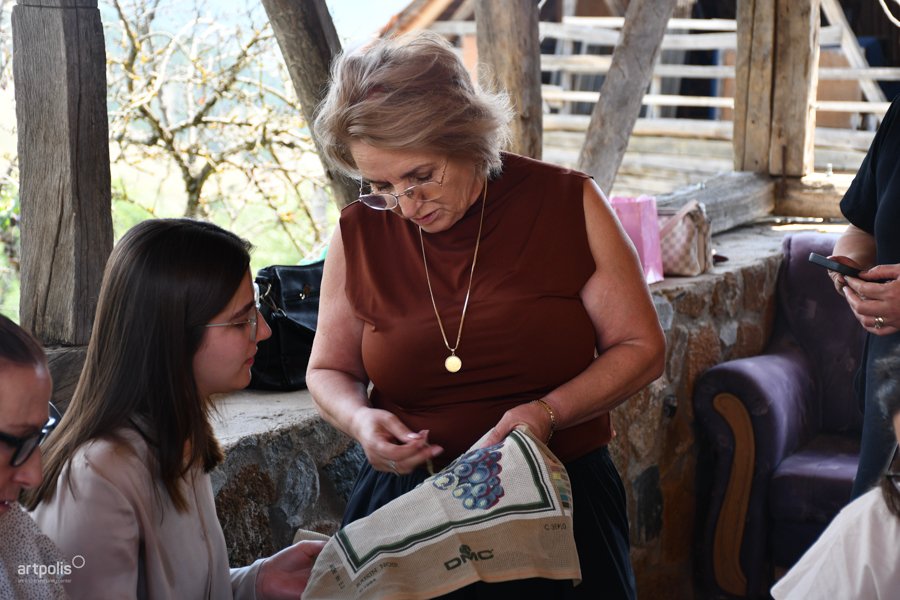
Workshops10.08.2026 On 10 August 2026, on the closing day of the 16th edition of Etno Fest in Kukaj Village, Artpolis, in cooperation with Etno Fest and QPDG, organized the workshop…
Read More
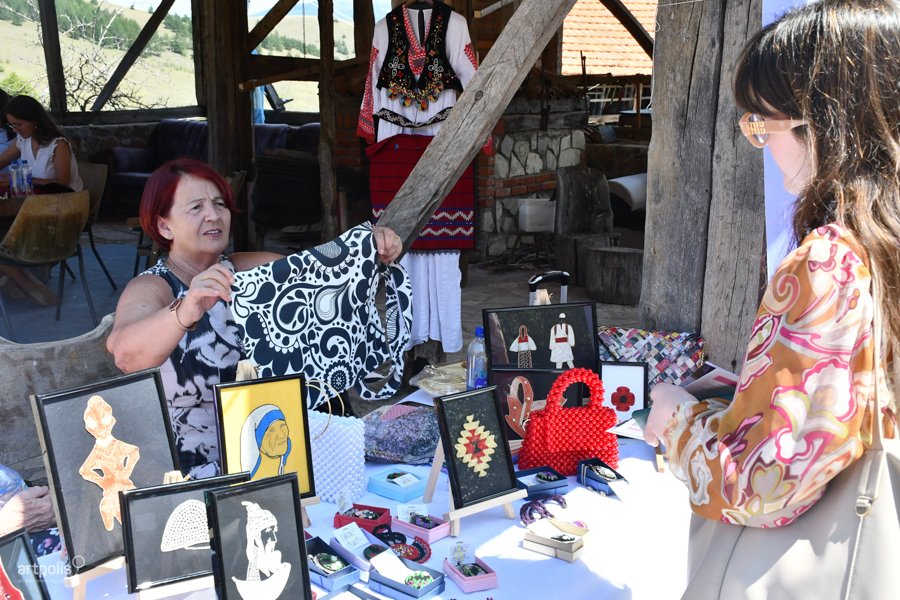
09-10.08.2026 On 9 and 10 August 2026, as part of the 16th edition of Etno Fest in Kukaj Village, the sales exhibition “Corner of Courage” was held, organized by Artpolis…
Read More
August 9, 2026
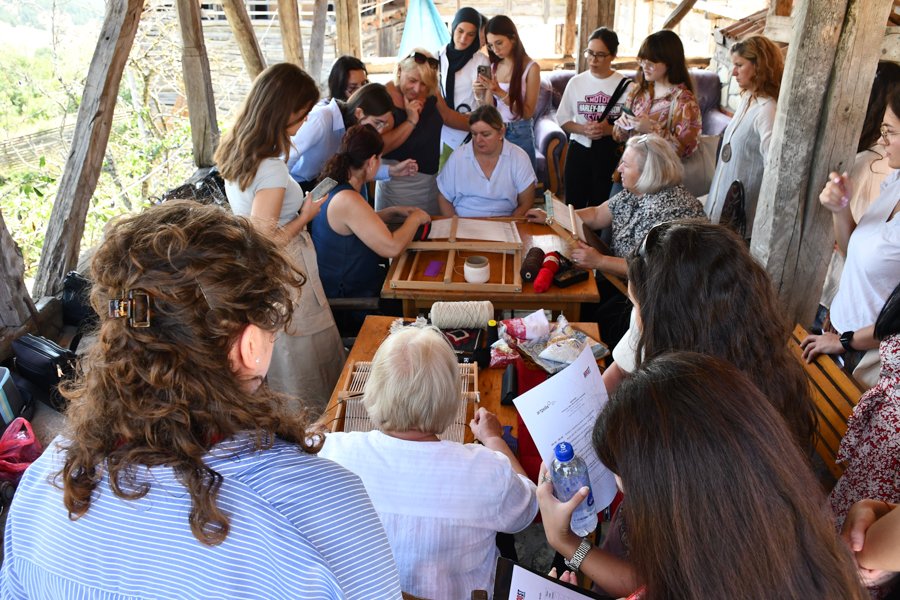
Workshops09.08.2026 On 9 August 2026, as part of the 16th edition of Etno Fest in Kukaj Village, Artpolis, in cooperation with Etno Fest and QPDG, organized the workshop “The Handloom…
Read More